Whether you’re a busy parent, a student, or someone eyeing retirement, your vision shapes how you experience the world. An annual comprehensive eye exam in is more than just a prescription check—it’s a complete check-in on your eye health.
In this guide, we’ll explain comprehensive eye exams, the benefits of scheduling one, and why it’s an essential part of focused eye care
What Is a Comprehensive Eye Exam?
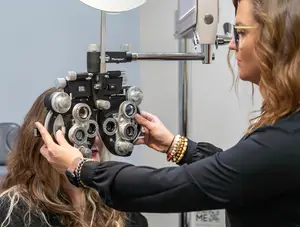
If you’ve ever walked into an eye exam expecting to read a few letters on a wall and leave with a glasses prescription, you’re not alone. But a comprehensive eye exam goes well beyond that. Here’s what is included in a comprehensive eye exam at :
- Visual acuity testing to determine if you need glasses or contact lenses.
- Refraction testing to pinpoint your exact prescription.
- Eye movement and muscle coordination checks to make sure your eyes work well together.
- Pupil reaction and peripheral vision assessments to screen for neurological issues.
- Eye pressure measurement to rule out conditions such as glaucoma.
- Retinal and optic nerve evaluation using advanced imaging tools.
- Slit lamp exam to assess the health of the cornea, lens, and other structures.
This is the gold standard for checking your complete visual system. In short, it’s the most thorough way to catch potential problems early—before they impact your day-to-day life.
The 6 Key Benefits of a Comprehensive Eye Exam
Still wondering whether it’s worth the time? Here are some of the most common comprehensive eye exam benefits for patients in :
1. Early Detection of Eye Diseases
Many serious eye conditions don’t cause symptoms in the early stages. Glaucoma, age-related macular degeneration, and diabetic retinopathy can all progress quietly. A comprehensive eye examination helps us detect and address these issues before vision loss occurs.
2. Better Vision, Better Comfort
Whether you’re squinting at road signs or struggling with reading up close, updated prescriptions make a difference. And if your vision keeps shifting, especially after 40, we’ll explain why and what to do about it.
3. Relief from Dry Eye and Screen Fatigue
Dry eyes are common in , especially among post-menopausal women and people working indoors. Your eye exam can reveal tear film instability or meibomian gland dysfunction, and we’ll build a care plan around treatments like iLux, warm compresses, and nutritional support.
4. Myopia Management for Children
More parents are hearing about progressive nearsightedness and its long-term risks. If your child’s prescription keeps increasing, a comprehensive eye exam allows us to offer safer, more effective strategies, such as MiSight contact lenses or low-dose atropine drops.
5. Medication & Systemic Disease Monitoring
Have diabetes or high blood pressure? Medications and medical conditions affect the eyes. A complete eye exam lets us monitor for subtle changes, often before you or your primary doctor notices any symptoms.
6. Personalized Recommendations
We tailor recommendations based on your life. That could mean computer glasses with blue-light protection, migraine-friendly lenses, or contact lenses for astigmatism. No two patients are the same; your eye care shouldn’t be either.
Get Focused Eye Care in , GA
At , we believe your vision deserves real attention, not just a glance at a chart. Our eye doctors offer complete, patient-focused eye care for families, professionals, students, and seniors in .
Ready to get started? Book your next comprehensive eye exam, and we will help you develop an eye care plan tailored to your needs.
Comprehensive Eye Exam FAQs
How often should I get a comprehensive eye exam?
We recommend an annual eye exam for most adults. Children, seniors, and those with medical conditions may need more frequent eye care.
Can I get a comprehensive eye exam if I don’t have vision insurance?
Yes. Many patients choose to pay out of pocket for eye exams, especially when they're part of a long-term plan like myopia management or dry eye treatment. Our staff can help you understand your options.
How long does an eye exam take?
Plan for 45 to 60 minutes. This gives us time to check every detail and answer your questions thoroughly.