Vision loss isn’t just a distant risk — it’s a real and growing concern for families, seniors, and young professionals in Athens. But the good news? Much of it can be prevented with the right tools and awareness.
At Thomas Eye Center, our team sees firsthand how early action and consistent eye care make all the difference. Whether you’re managing contact lenses, watching for signs of age-related macular degeneration, or navigating screen-heavy workdays, we’re here to help you protect your vision now — and for the future.
What Causes Preventable Vision Loss?
Many cases of blindness don’t start with a sudden event. They begin quietly — with small changes in your vision that, if left untreated, can turn into something serious. In Athens, the most common culprits include:
- Age-related macular degeneration (AMD): A leading cause of central vision loss in people over 60. With a growing senior population in Georgia, AMD is a top concern for many local families.
- Diabetic eye disease: Diabetes continues to rise in Georgia, making diabetic retinopathy a growing threat — especially without early detection.
- Glaucoma: Known as “the silent thief of sight,” glaucoma can cause permanent vision loss before symptoms appear.
- Cataracts: While cataracts are age-related, untreated cases can impair day-to-day functioning.
- Infections & injuries: From poor contact lens hygiene to workplace accidents, sudden eye trauma can cause irreversible damage.
- Digital eye strain: High screen time is a reality for many students, educators, and remote workers in Athens, putting added strain on their eyes — and masking deeper issues.
The good news? These eye conditions can be managed or slowed with early diagnosis through a comprehensive eye exam.
6 Tips for Preventing Blindness in Athens
Preventing blindness doesn’t require extreme measures. For most people, it’s about making consistent, informed choices — especially when it comes to monitoring eye health and managing chronic risks. Here are six practical ways you and your family can protect your sight:
1. Prioritize Annual Eye Exams — Even If You See Fine
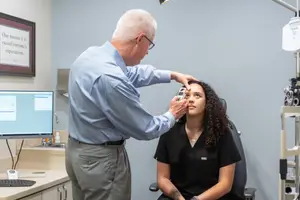
A routine eye exam does more than update your eyeglasses. It checks for early signs of eye diseases — like glaucoma, diabetic retinopathy, or age-related macular degeneration — before they cause vision loss. At Thomas Eye Center, our comprehensive eye exams are tailored to your age, health history, and lifestyle.
Key tip: Adults over 60 should be seen by a healthcare professional annually. People with diabetes may need more frequent monitoring.
2. Know Your Family History
Eye conditions often run in families. If your parent or sibling has glaucoma, AMD, or diabetic eye disease, your risk is higher. Share this information with our eye doctors, so we can keep a closer watch and act early if needed.
3. Manage Chronic Health Conditions
Diabetes and high blood pressure have a direct impact on eye health. Uncontrolled blood sugar can lead to diabetic retinopathy, while hypertension may increase glaucoma risk. By managing these conditions — through medication, diet, and routine care — you’re also protecting your eyes.
4. Protect Eyes from Injury & Infection
Contact lenses are convenient, but without proper hygiene, they can lead to infections that damage the cornea. Simple steps, such as washing your hands before inserting lenses, avoiding overnight wear, and replacing your case every three months, go a long way.
If you work in a high-risk job or spend time in dusty, hazardous environments, wear protective eyewear to avoid trauma-related vision loss.
5. Watch Screen Time & Blue Light Exposure
People in Athens spend more hours than ever on digital devices. Over time, this can cause digital eye strain and disrupt tear production, especially in children and remote workers. While screen use doesn’t directly cause blindness, it can make it harder to detect or manage early-stage eye diseases.
Try the 20-20-20 rule: Every 20 minutes, look at something 20 feet away for 20 seconds. Pair that with blue-light-filtering glasses or updated contact lenses that offer digital protection.
6. Support Research and Community Initiatives
Organizations like Prevent Blindness Georgia and Research to Prevent Blindness are making big strides in both education and innovation. At Thomas Eye Center, we believe staying informed is part of staying healthy — and local awareness campaigns can bring vital eye health services to those most at risk.
Protect Your Sight in Athens with Trusted, Ongoing Eye Care
Losing your vision doesn’t happen all at once — and it doesn’t have to happen at all. At Thomas Eye Center, we’re proud to serve Athens with the kind of long-term, relationship-based care that helps prevent blindness and preserve sight.
From contact lens safety to the early detection of age-related macular issues, our doctors take the time to understand your needs and provide care tailored to your lifestyle. Book your eye exam; our team is here to help you stay focused on what matters most.
Blindness Prevention FAQs
What are the most common causes of blindness?
The top causes include age-related macular degeneration, glaucoma, diabetic eye disease, and cataracts. Many of these conditions are manageable — especially when diagnosed early through a comprehensive eye exam.
Can contact lenses cause blindness?
Rarely, but poor contact lens hygiene can lead to serious eye infections, which may result in vision loss if not treated promptly. Always follow your eye doctor’s instructions for cleaning, wearing, and replacing your lenses.
How often should I get an eye exam to prevent vision loss?
Adults under 60 should have an eye exam every 1 to 2 years. After 60 — or if you have risk factors like diabetes — yearly exams are recommended to catch eye diseases early.